Even if you can't draw, now you can exhibit at the Tel Aviv Museum
This interview was first published in Hebrew by Portfolio magazine. Thank you to Yuval Saar for agreeing to publish this translation.
Visitors to the Tel Aviv Museum of Art can learn to draw with works from the collection as their inspiration, scan what they made and upload it to a digital exhibition. Yuvi (Yuval) Gerstein, the musician leading the project for Simply, talks about the natural move from teaching piano and guitar to teaching drawing.
Yuval: Hi Yuvi, good afternoon. How's the holiday season been for you so far?
Yuvi: It's been nice. I'm with the kids a lot, but honestly I'm waiting for the routine to come back.
Yuval: Yeah, I can understand that. We're here to talk about Simply's lovely project at the Tel Aviv Museum. How old are the kids? Were they among the testers, before everyone else?
Yuvi: Yes, it really is an exciting project, for me personally and for Simply. My kids have been there a few times, and my youngest son, Peleg, who's 6, was the first to draw with the special drawing app we created for the museum.
Yuval: Cool. I'm not sure where to start: what Simply does, what you do at Simply, or the museum project. What do you say?
Yuvi: I can start with a bit of background about me and about Simply.
Yuval: Go ahead.
Yuvi: I'm a musician, a guitarist and producer. I studied at the Jerusalem Academy of Music, which is also where I met Yigal Kaminka, one of Simply's founders. I've had several bands, including one called Coolooloosh, and I toured the world a lot. Later I had a great recording studio called The Slick Studios in Florentin, Tel Aviv. Together with my partner Ori Winokur, we produced a lot of artists, mostly indie.
In 2019 I joined Simply, which was then known as JoyTunes. Our flagship product was a piano-learning app, and when I joined we started working on the guitar app. The idea behind Simply is to make creative hobbies accessible to everyone. We do that through apps that stand out both in their teaching content and in our technology, which, for example, recognizes what users are playing in real time and corrects their mistakes.
I joined as a guitarist with a lot of experience teaching guitar.
Yuval: Wait, I didn't get that. You joined Simply as a guitarist?
Yuvi: Yes. I joined because of my extensive experience teaching music, mostly guitar. The goal was for me to write the lessons themselves and the teaching method for the app. That experience is critical in this field, because turning what I know into teaching that isn't physical, face to face with a student, is a big and fascinating challenge.
We have quite a large guild of musicians who do exactly that. In the end, I learned here how to create a product meant for everyone, and how to translate teaching know-how into an app that works in a different way. We want as many people as possible to be able to learn guitar, piano, singing and more… and we use both the teaching approach and the technology we develop to make it work as well as possible. And it really does work, surprisingly well.
Simply keeps expanding the fields we're involved in, and the latest thing we added was drawing: a drawing app, but one that teaches you how to draw on paper with a pencil.
Yuval: That's exactly what I wanted to ask. From the company's point of view, was the move from music to drawing a natural, obvious one?
Yuvi: Yes, absolutely obvious. We want to broaden our product offering, and we want to help both kids and adults develop creative hobbies. We know how to take learning processes that are complex, and sometimes intimidating, and turn them into something accessible and fun that gives you real value, value that carries over into the real world.
Yuval: So let's move on to the museum project. Tell me what's happening there and how it works. I've been at the museum a lot over the last two months, and I'm always happy to see satisfied, happy visitors at the stations you set up there.
Yuvi: Yes. I'll say that my background with this kind of project helped me lead this one. About ten years ago I built a huge, shared musical instrument called GRIDI, which I installed at Madatech in Haifa and in other places around the world. So this was exactly the kind of place I know and love to create in.
We're truly moved and thrilled by the response to this project at the museum. It's a successful collaboration that brought our drawing app, in physical form, into the heart of the museum. Our drawing app, Simply Draw, is very successful, especially among kids and young people, but adults love it too, and we saw that at the museum.
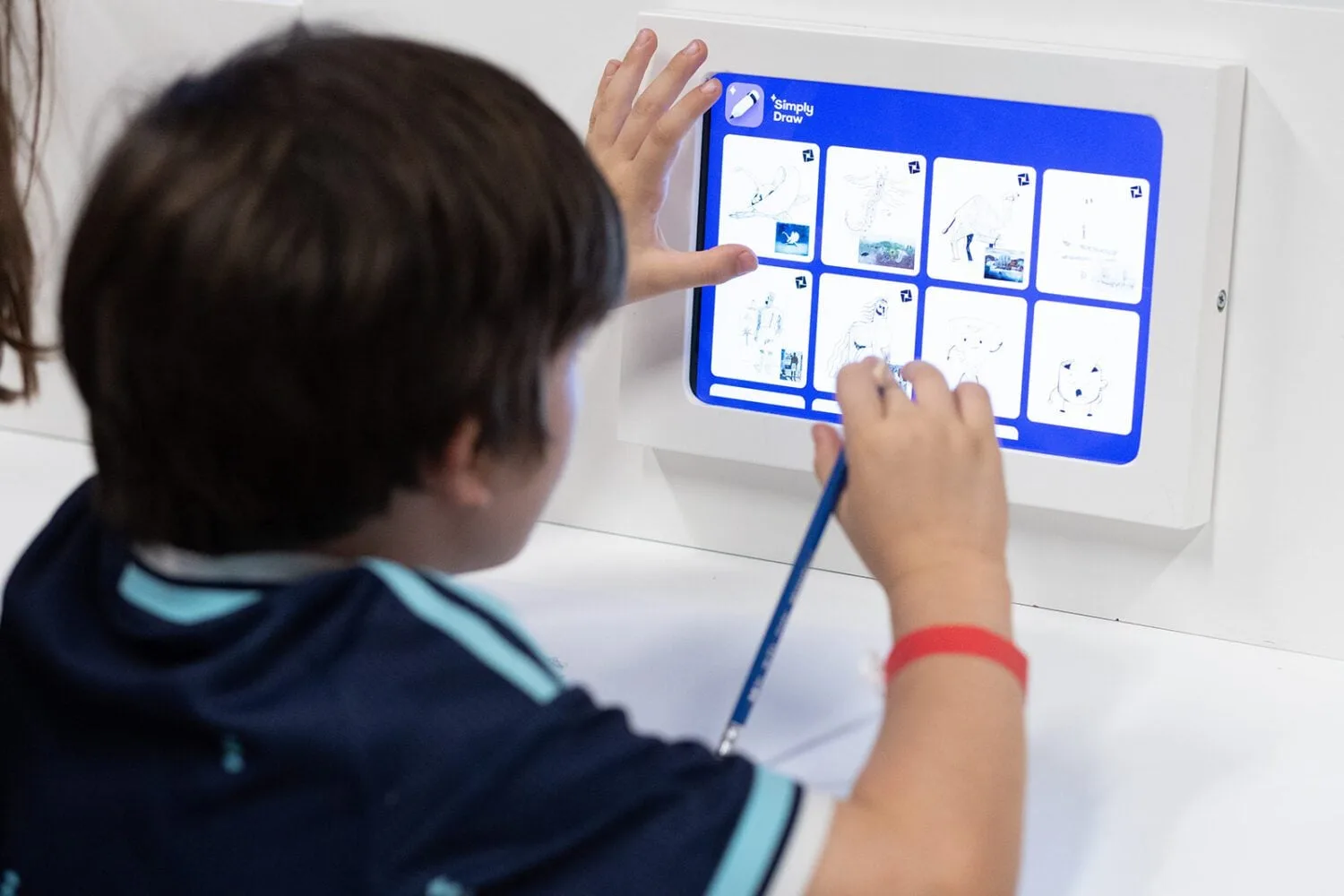
The idea was to let visitors experience the exhibitions and see the museum's collection, then come to the 20 stations we set up and take an active part in creating. That is, draw drawings inspired by the museum's collection.
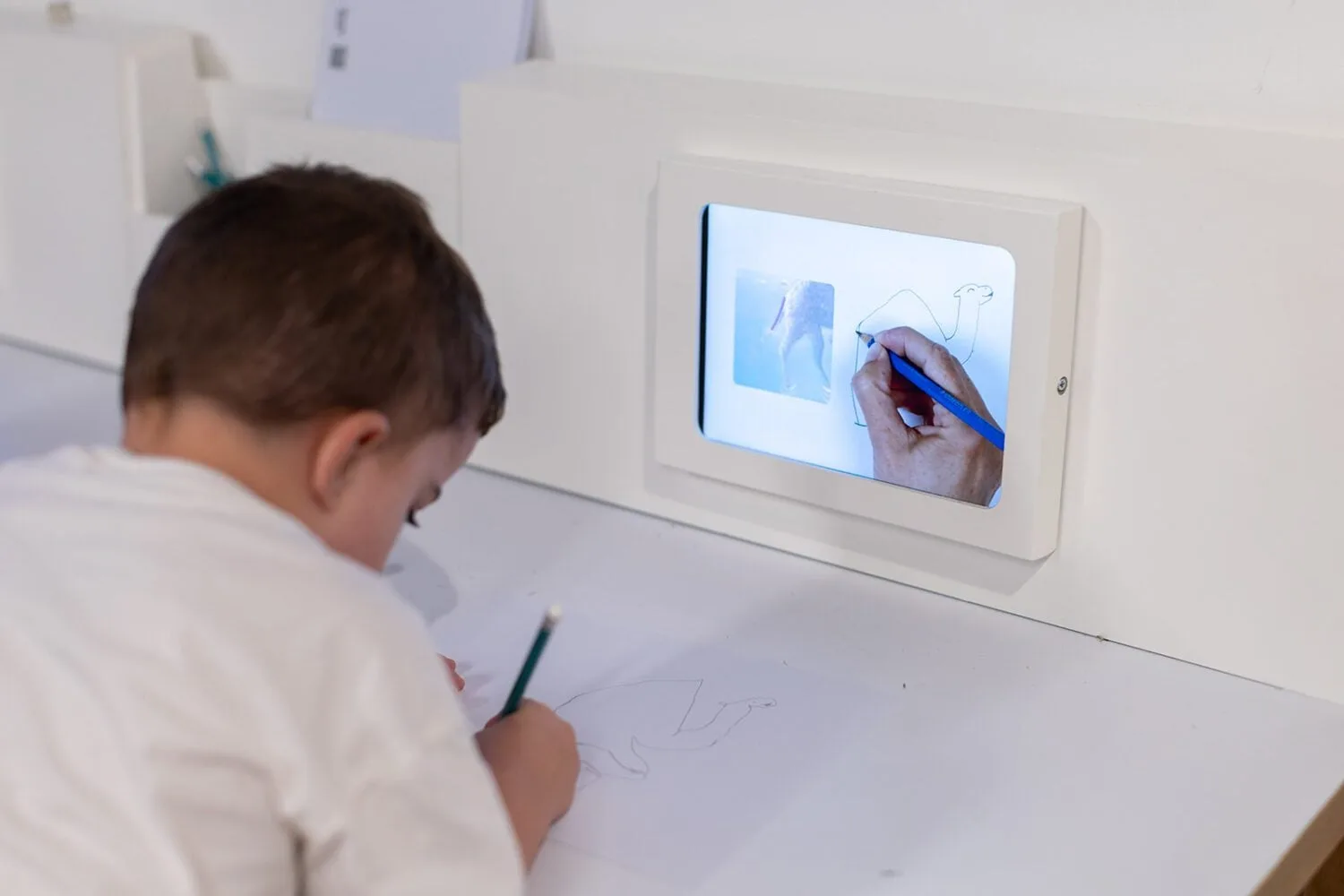
We created six unique lessons based on works from the collection, and we also included popular drawings from our app. That combination was a winner, because everyone finds what they want to draw. At the museum we set up 20 stations at specially built tables, and each station has a touchscreen through which you learn to draw.
One of our constraints was that we couldn't use sound, because it would have made noise in the space and wouldn't have worked well. Even so, we created a silent experience that works extremely well. People don't want to leave… especially kids.
Yuval: How does it actually work?
Yuvi: It's very simple. You walk up to a station, and you have paper and pencils, an eraser and a sharpener. You tap the screen and choose the drawing you want to learn. You go into an interactive lesson where you learn from scratch how to draw that drawing, and the app waits for you until you're ready to move on to the next step. The instruction is as simple and clear as possible. You also learn how to use sketching techniques like shading.
I'm an expert in music, not drawing, but even when I draw with it, I really feel like I've created something of good quality, and I don't consider myself someone who knows how to draw at all.
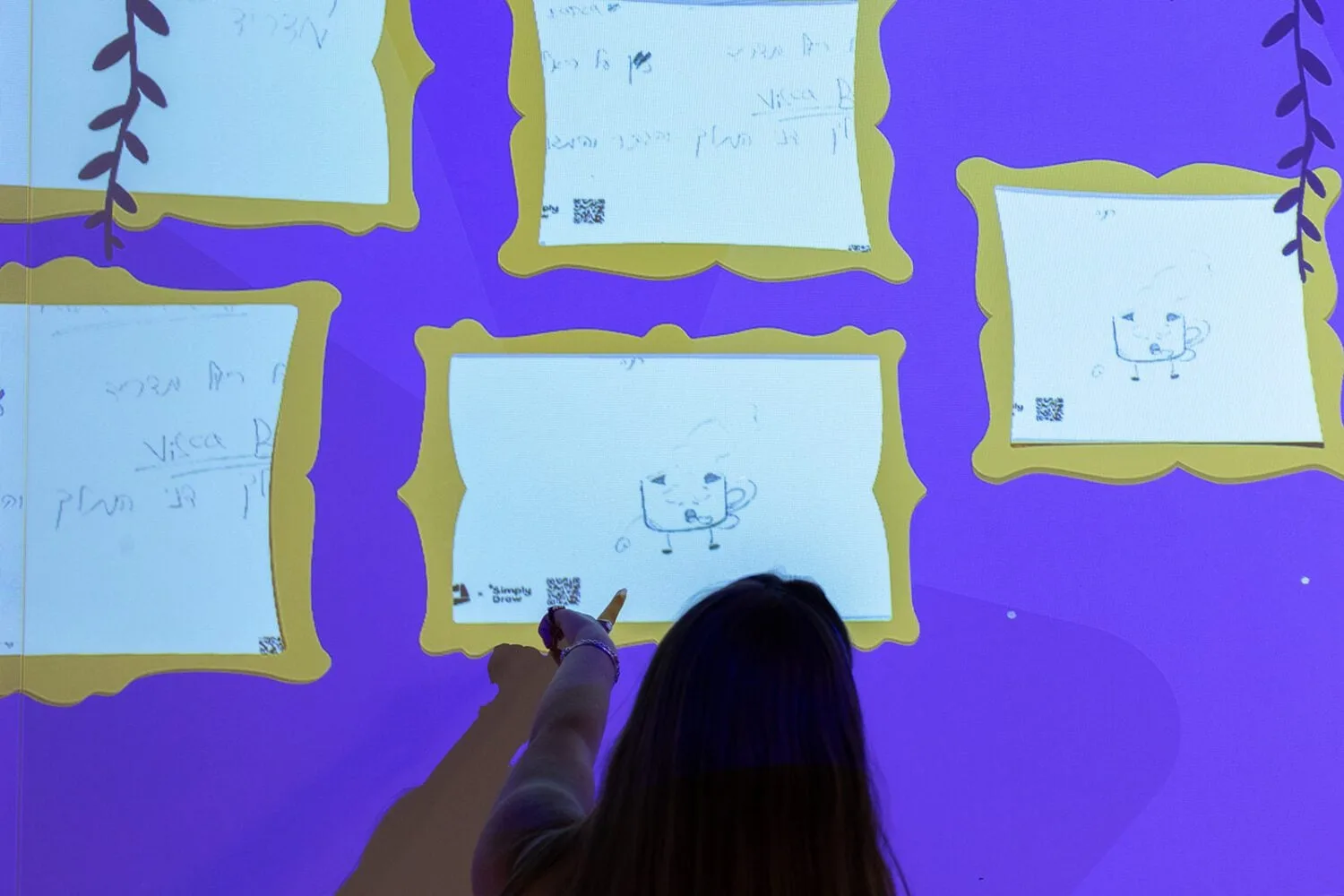
Beyond that, we added something that doesn't exist in the apps. Once you've finished your drawing, you go to one of two scanner stations, where you can upload your drawing to a digital exhibition. We really developed this from scratch, both the furniture for it and the whole system. In other words, the participation experience goes from the digital world, which shows you the drawing, to the sheet of paper, and then back to the digital world for the exhibition projection, and you feel like part of the museum.
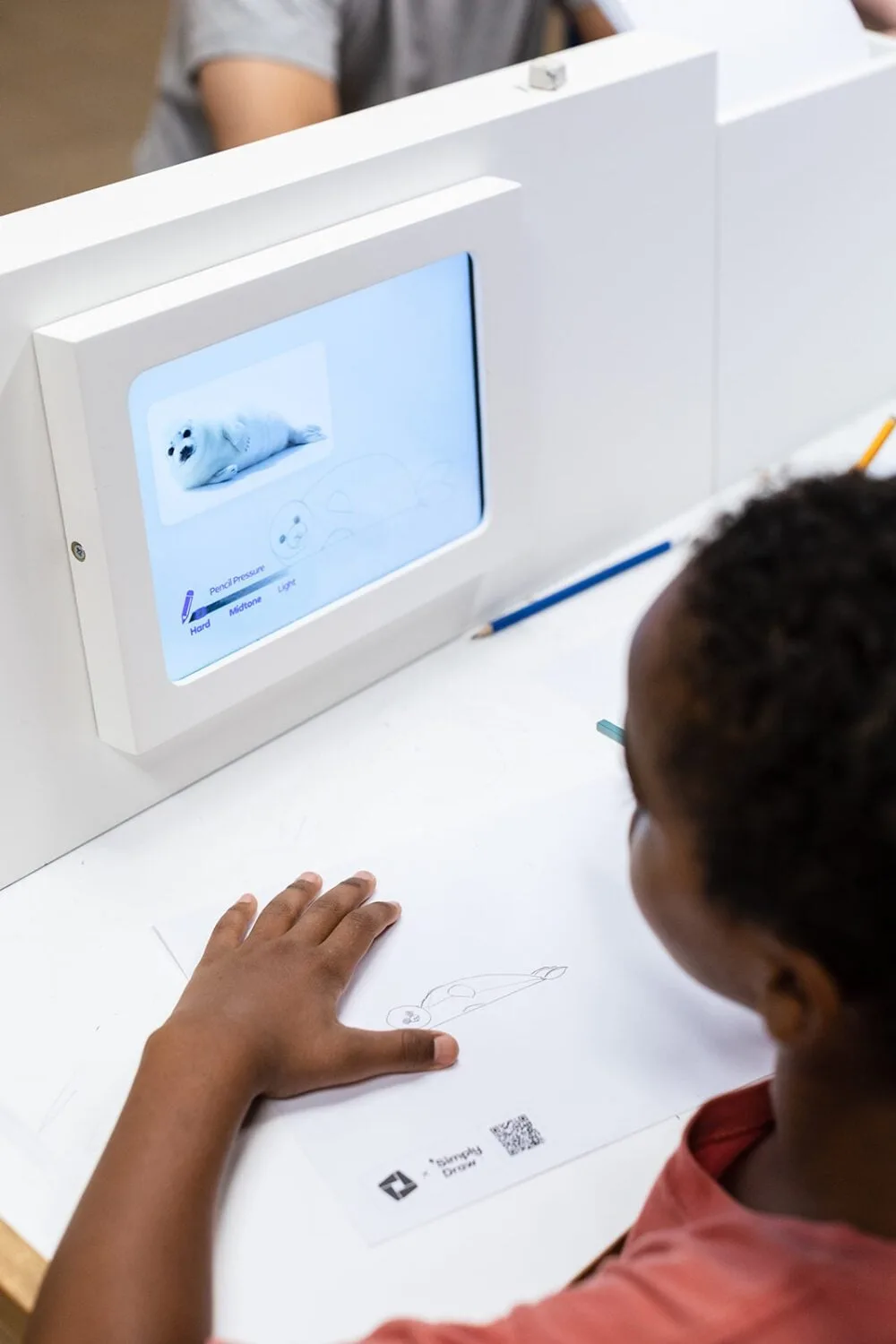
Yuval: Cool. Still, give a specific example: how do you teach shading? Or another technique? Do they teach you how to hold a pencil? How hard to press?
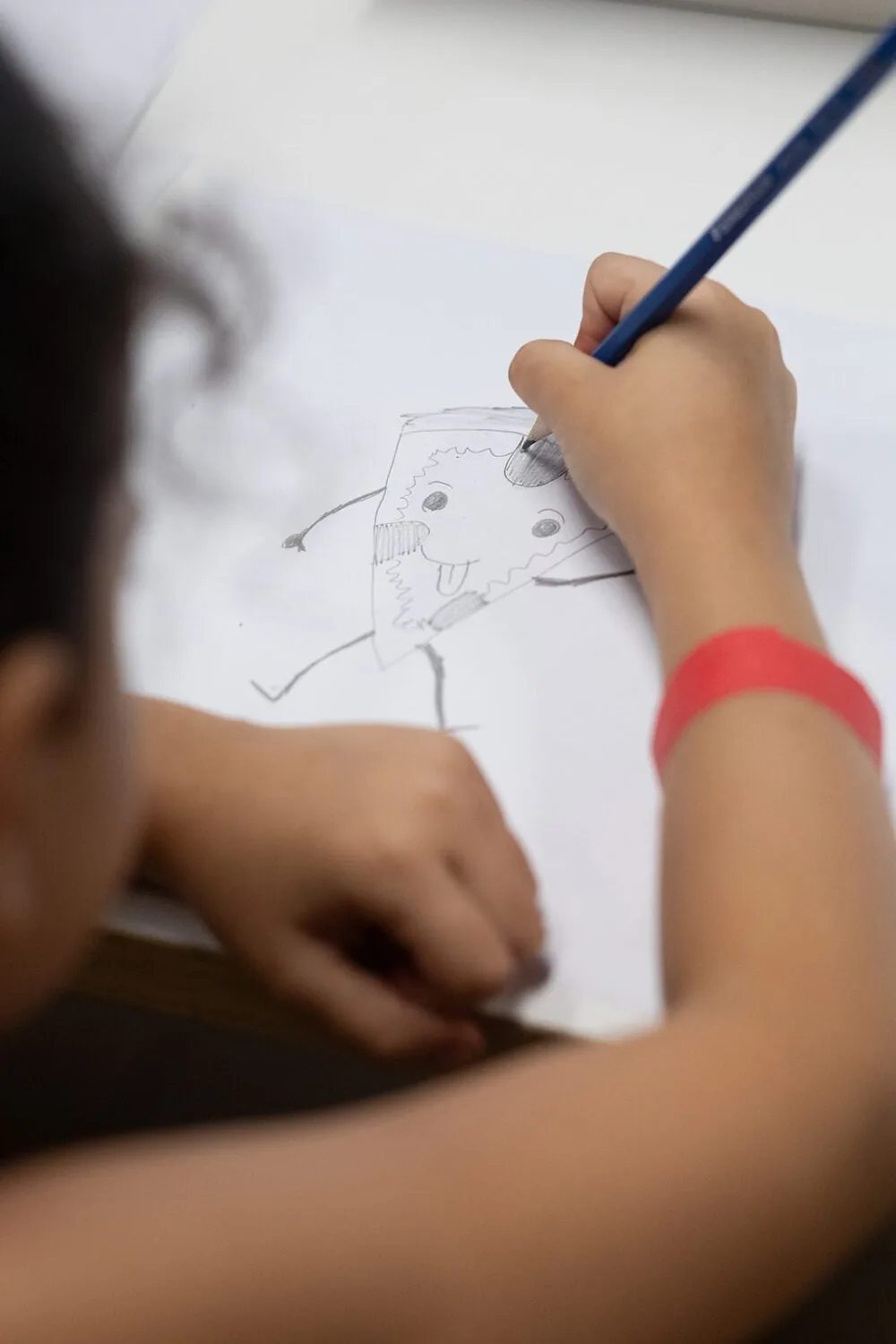
Yuvi: Again, I'm far from being an expert in drawing. I can tell you as a user that, for example, they teach you how to hold the pencil in a certain way and create shading on characters. When you watch and follow what you're being taught, you suddenly end up with a drawing that feels alive and much better than what you would have done on your own. It could be a pizza that looks like a living character, or a figure from a painting by Zoya Cherkassky, which takes time to draw but comes out amazing.
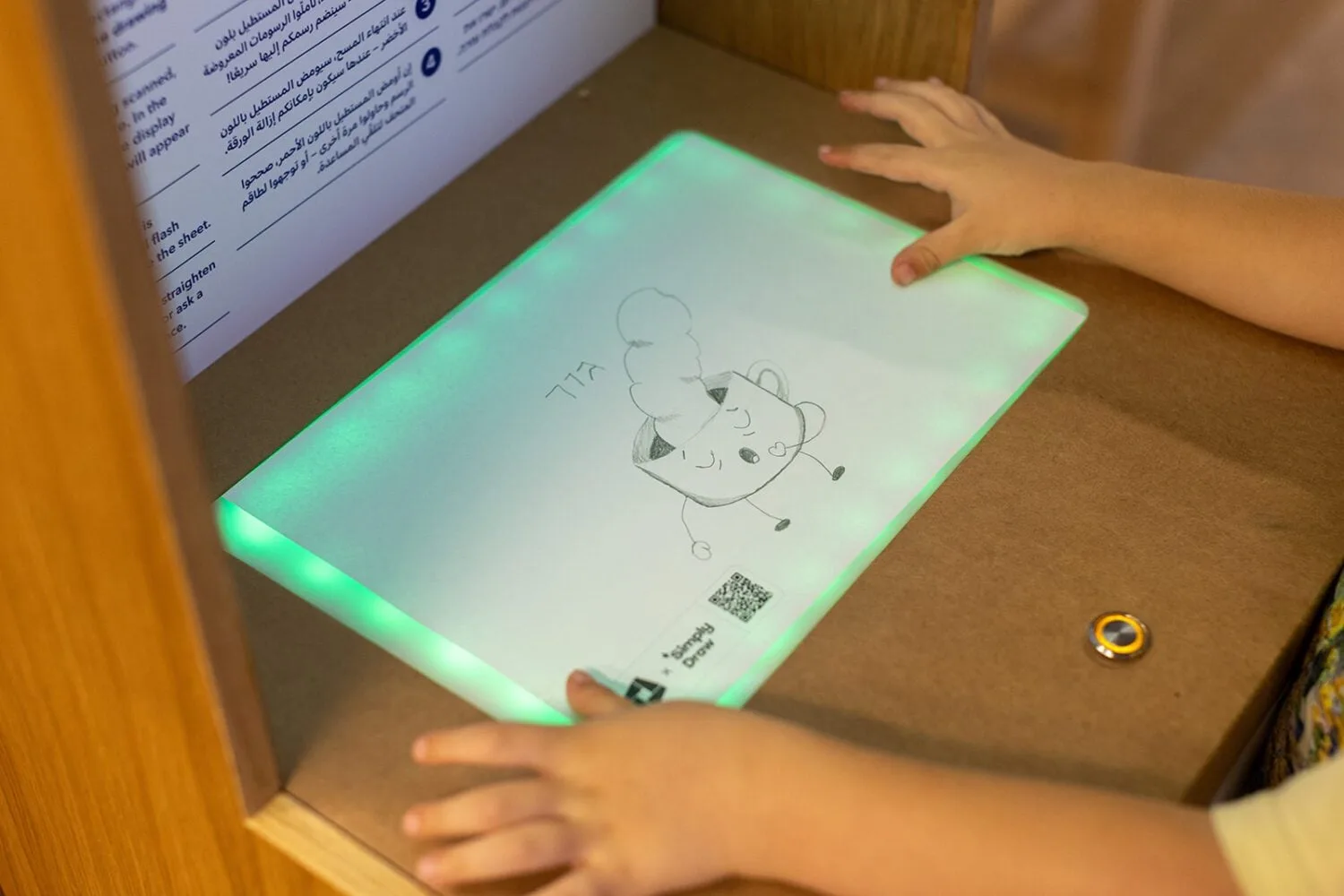
Yuval: I agree. I'm also far from being an expert in drawing. The best compliment I ever got from Rutu Modan was that I'm an honorary illustrator… maybe after Simply I'd have reached the next level.
Yuvi: Haha, yeah, that's the power of this method, I think. What the drawing teachers who work with us managed to create is an experience that feels fun and not stressful, and also leads to results you want to show Mom and Dad.
I can tell you that setting up the exhibition at the museum took a few days. We put up red tape so people wouldn't come in, because it wasn't fully ready yet: electricity and so on. From the very first day, people just breezed past the barriers and started drawing. Nothing stopped them… You could say that's just Israel, but it also says something about the crazy pull of a project like this.
Yuval: Cool. What's the next step? Where else can a project like this go?
Yuvi: First of all, the project will stay at the museum for a long time, and we're very happy that more and more people are experiencing it. That really moves us. I'll say that our investment in creating the project was not small. There are a lot of moving parts here, a lot of systems that have to work together, and above all our employees, who took on this effort on top of what they already do day to day, which is challenging and busy as it is.
In any case, what we learned is that this isn't just possible. It's a great fit for places like the Tel Aviv Museum, one of the most visited museums in the world. We see this as the first of many projects of this kind. We learned a lot about how an operation like this works and how we can apply it in other places.
Right now we're looking at more options around the world, and I don't rule out our other apps joining in too, for example piano or guitar. Why not, really? We want to be not only in an app but also physically out in the world, in the places where people are, consuming culture and looking for activities that broaden their horizons. We want to be there.
Yuval: Totally, why not, really. What else? Anything else important to say before we wrap up?
Yuvi: I'll also add that this kind of project isn't just interactive fun at the museum that keeps kids busy. There's a whole pedagogy behind it, a serious, deep app that teaches wonderfully and can go with you anywhere. So the combination is the winner: on one side, the connection to the wonderful works in the museum and taking part in an activity tied to the museum itself and its values, and on the other side, what stands behind it, meaning our app and our way of teaching.
And truly, from the responses we got, and from the museum staff, who were with us through every detail and every challenge, I can say from the bottom of my heart that it only made us want more and more of these collaborations.
I'll also add that about a year ago we did a collaboration with Sheba Hospital. We built a brand-new music room there and filled it with musical instruments and our apps. That was our first success in this area, and in a place that rehabilitates the wounded and the sick, no less. So there was a very meaningful connection there, one that also ties into our desire to do good, doing good in its simplest sense: using the means we have to do good. That connects to who we are.
Sorry if that sounds clichéd… I'm really getting emotional here.
Simply Drawing at the Museum | In collaboration with the Simply Draw app
Curation and production: Shani Almog Broitman, Maayan Cohen Dweck, Maya Yurkevich
Tel Aviv Museum of Art
Closes: 30.4